By Kailyn Bowman
At one point in time, mass media was restricted to select individuals. Journalists, news anchors, and movie stars held prominence with their voices speaking their opinions for all to hear, while the everyday man sat quietly by and watched. However, with the internet came the rise of social media sites such as Facebook and Instagram that allowed anybody to produce media content that could be viewed by millions all over the world. Unfortunately, even though social media has emboldened many to express themselves without fear of rejection, it has left many with the all-consuming fear that their individualistic expression, whatever form that may take, is not good enough for public consumption. That is the problem my product hopes to solve. I believe that with the new user-friendly media resources that are available to the public in this modern age that there should be an outpouring of diverse art. From music to podcasts, everyone has the desire and the right to express themselves in any medium. In this increasingly commercialized world, where financial interests have corrupted even newspapers, it is more important than ever for free expression to exist in order to maintain the voice of the ordinary people.
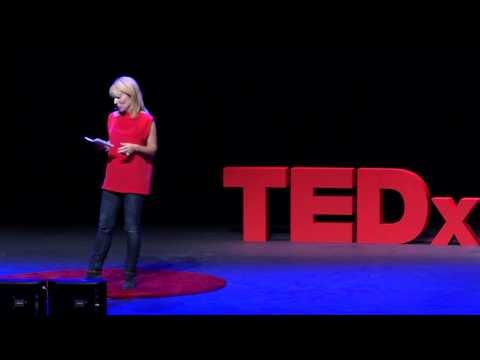
I believe Katerina Gregos said it best in her TED Talk “Why Art is Important”, when she described art as a movement that “strives to provide a counterpoint to the prevailing images of power and the stereotypes that are fed to us by the media.” Art allows for communities to establish their own representation that they share with the world.
My product is a website called Art Haven, and it is designed to allow artists of all backgrounds to collaborate and comment on each other’s works. Works ranging from creative writing to music compositions, people from all over the world would be able to come together in order to inspire and refine each other’s art. The idea would be that people would have a safe space to present their art to others in order to receive constructive criticism before they submit it for professional publication. For example a painting for an art show, or a poem for a slam poetry event. The ultimate goal of the website would be that ordinary people would have a safe space to share their art, and then they could receive feedback on their art. They can also be inspired by other artists, either by merely taking inspiration from other artists creations or by directly connecting with other users in order to collaborate on a project together.
Simply put, Art Haven is a similar platform to Facebook or Instagram. Users can create free accounts on the site to post their original content, and then people can respond to their content with comments. The difference lies in what the content that is being posted is. The site makes it easy to upload many different types of content. People can post videos of themselves singing, but they can also upload audio files without video. They can also scan documents or paintings directly onto the site. This is, in addition, to be able to post photos directly onto the site for example of sculptures, onto the site like Instagram.
One of the most critical aspects of this site is the no tolerance bullying policy. While the site encourages active discussion in the comments in order to promote and improve burgeoning artists work, we do not tolerant comments that are clearly meant to demean and hurt other users. The ultimate goal of this site is, as said above, to encourage the users to make adjustments to their projects in order to increase their confidence in their work. This is why users do have the option to remain completely anonymous on the site, and therefore if they are nervous about sharing their work, they do not have to have their name attached to it. In addition to the constructive criticism and positive feedback that this site provides to its users, it also has features that encourage social communication in order to foster collaborative projects.
In order to investigate the validity and usefulness of my product, I choose to interview Professor Courtney Putnam as my community scholar. Professor Putnam is currently the Editor in Chief of Cascadia college’s literary magazine “Yours Truly” and teaches the magazine publication classes on campus.
She has an extensive background in both producing media content and using media tools. In her college years, she was the campuses literary magazines editor. Through this and her college classes, she learned graphic design and journalism, which she then took to her future career as a content creator for store advertisements. Since then she has been a professor at Cascadia and editor of “Yours Truly” for the last four years. “Yours Truly” magazine serves both the Cascadia and UW Bothell campus as well as the entire Bothell community. Anyone from the community can submit to be published in the magazine in the fall, and then the magazine is published once a year in the spring. The magazine is published both as a hard copy and online, which means that submitters can also submit media projects such as songs to be uploaded to the online magazine. Since the magazine is published only once a year, the rest of the school year is dedicated to narrowing down what submissions will make the cut and how they will be arranged in the magazine. This is done primarily by the Magazine Publication class students with guidance by Professor Putnam. At the beginning of my interview with her, I discussed the importance of college literary magazines. Professor Putnam expressed her opinion that literary magazines are extremely important to communities as they are a reflection of positive diversity within a community because they promote free expression while also promoting equality since the submission process is entirely anonymous and therefore anyone has the chance to be published. From there we discussed what some of the major problems that she and the class experienced during the creation process of the magazine. The two significant problems she pinpointed were concerning group editing and submissions. Professor Putnam explained to me that group editing was extremely hard for the class to accomplish as students had to work on their pages separately instead of having one group document that they could all edit. The other problem was regarding the submissions they get every year. Professor Putnam told me about their difficulties spreading the word about the magazine and the open submission process. She said she hopes that in the future they can attract more submissions every year. In regards to this problem, I asked her about the potential for my product in attracting people to submit more projects to not only Cascadia’s magazine but to any publication globally. She said she thought my product had a lot of potential for allowing people around the world to refine their various art forms and give them the confidence to present them publicly. She agreed with my assessment that there are plenty of talented artists out their who want to express themselves and share their art with the world, but they lack the confidence or the instruction in order to pursue public recognition.
The other positive social impact that I believe my product will have is its ability to allow people to have a platform to express themselves through their art.
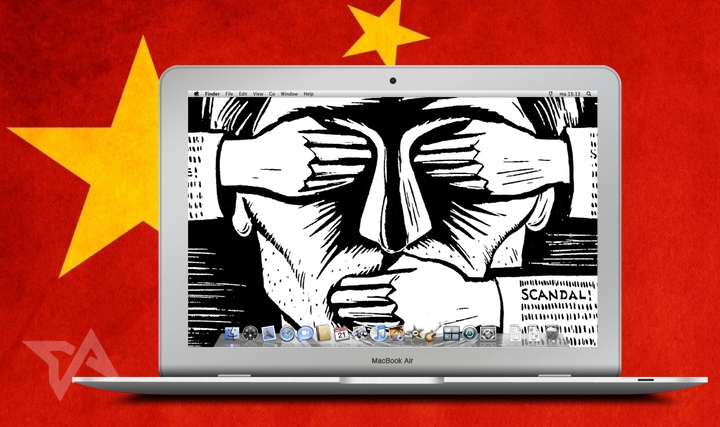
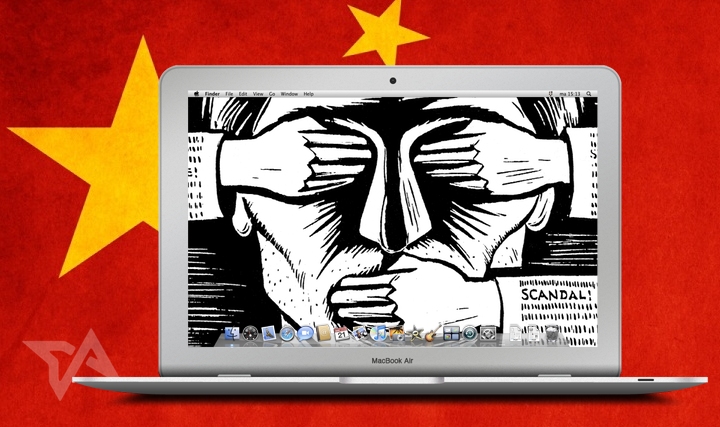
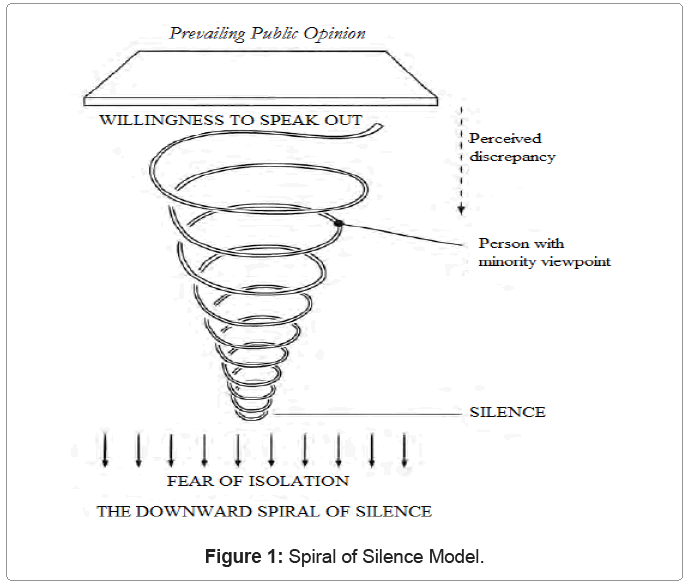
In countries like China where censorship blocks many social media sites from being seen or used by its citizens, it is more crucial than ever for people in countries like that to have an outlet that allows them to showcase their politically and socially charged art. However, even in countries where free speech persists such as the United States, people are still concerned about how they and their beliefs are perceived by society. Fear of public opinion coincides with the media theory is the Spiral of Silence.
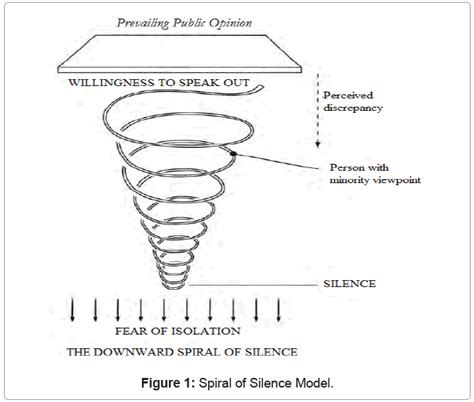
The Spiral of Silence is the study of human communication and public opinion, the theory that people’s willingness to express their opinions on controversial public issues is affected by their largely unconscious perception of those opinions as being either popular or unpopular. Specifically, the perception that one’s opinion is unpopular tends to inhibit or discourage one’s expression of it, while the perception that it is popular tends to have the opposite effect. According to the textbook “Media and Culture: Mass Communication in the Digital Age”, this theory is predominantly due to the presence of mass media, because when the media tends to primarily support one viewpoint it can lead to the inaccurate assumption that everybody in the community holds that viewpoint. I believe that the anonymous aspect of the website will allow people to at least get their feet wet in publically sharing their art before they are ready to publicly attached their name to it. In addition to seeing the fantastic projects that others are working on, Art Haven will hopefully inspire others to try and tap into their own artistic talents.
Art Haven is a place for free expression devoid of the stigmas of the mainstream media. By creating art people are making a statement. A statement about themselves and about the world around them. People who have the courage to speak their mind through their work are leaders, and this world needs more leaders, not followers, who take action instead of blindly following the status quo. Art not only has the power to change one individual, but to change the world.
Citations
Campbell, R., Martin, C. R., & Fabos, B. (2014). Media and Culture (9th ed.). Boston, MA: Bedford/St. Martin’s.
Social media and censorship in China: How is it different to the West? – BBC Newsbeat. (2017, September 26). Retrieved March 17, 2019, from http://www.bbc.co.uk/newsbeat/article/41398423/social-media-and-censorship-in-china-how-is-it-different-to-the-west
Petersen, T. (2019, January 02). Spiral of silence. Retrieved March 17, 2019, from https://www.britannica.com/topic/spiral-of-silence
Gregos, K. (Writer). (2019, March 16). Why art is important. Live performance in TED Talks, Boston.
Community Scholar: Courtney Putnam, Editor of Yours Truly Magazine & Magazine Publication Professor

 CMST 203-Media in U.S. Society Final Project